You open your laptop, ready to work.
Before you even start, you’re asked to choose:
Which AI tool? Which workflow? Which prompt? Which subscription tier?
By the time you’ve made your decisions, your focus is gone.
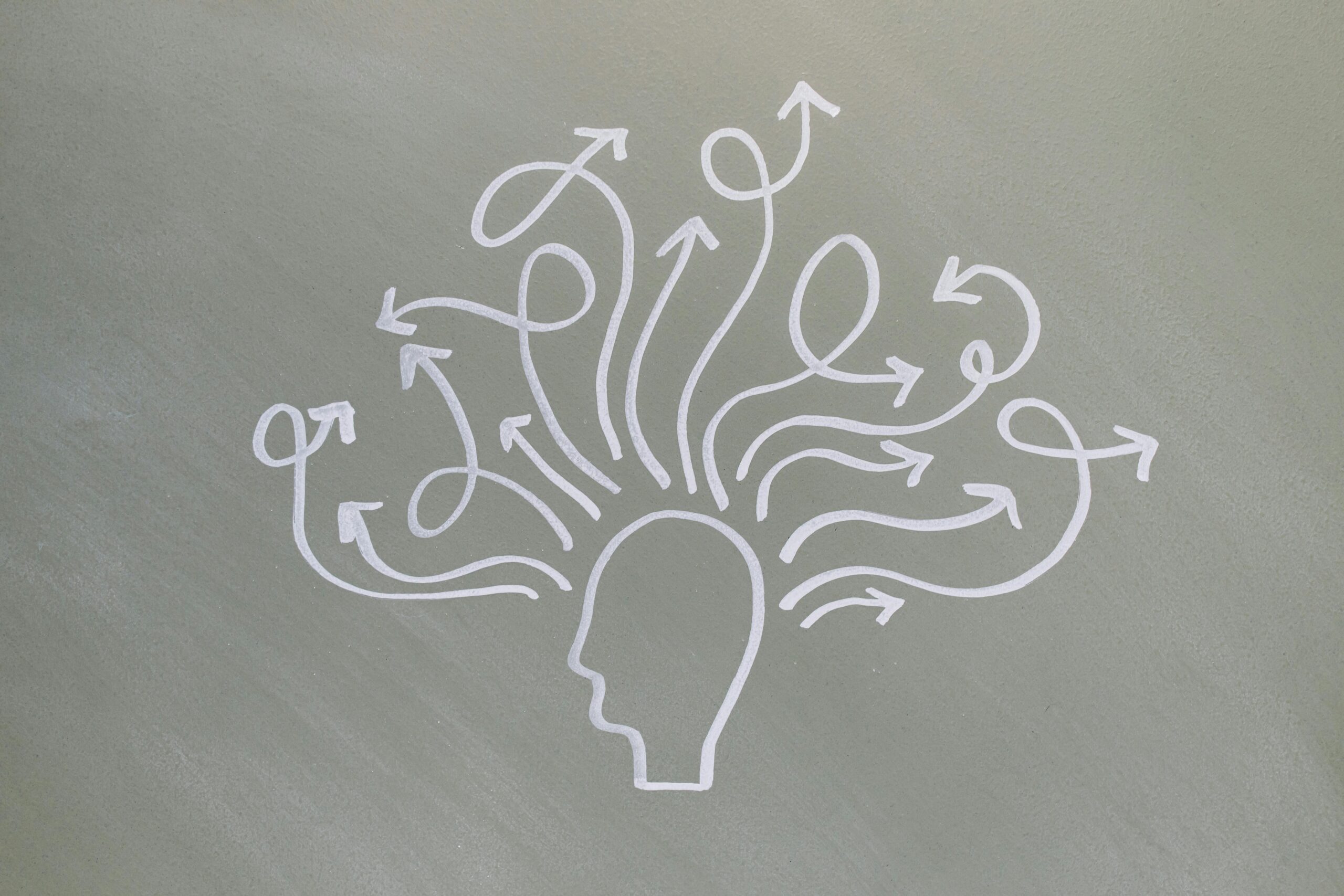
Welcome to the age of decision fatigue, a silent productivity killer that’s grown louder as AI tools multiply.
In a world where every new app promises to “save you time,” most solopreneurs are ironically losing more of it just deciding what to use.
This article explores why decision fatigue happens, how it drains creative energy, and the simple systems that can help you reclaim clarity and control.
1. The Invisible Cost of Constant Choice
Psychologists define decision fatigue as the mental exhaustion that builds up from making too many small decisions.
Each choice, no matter how minor, drains a bit of willpower.
Now layer that on top of the AI tool explosion.
Every week, a new “must-try” app lands in your feed. You’re told you need it for writing, scheduling, designing, accounting, analysing, automating… the list never ends.
Suddenly, you’re not running your business, you’re running a constant comparison test.
The result:
- Mental clutter instead of focus.
- Hesitation instead of execution.
- A dashboard full of half-used tools, none fully mastered.
If you’ve ever opened three AI tools to do one task, only to close them all and go make coffee, you’ve met decision fatigue.
2. Why AI Makes It Worse (and Better)
AI is supposed to simplify work, but paradoxically, it often adds complexity.
Here’s why:
- Infinite options: Tools like ChatGPT or Notion AI can do almost anything, which means you first have to decide what you want them to do.
- Unclear differentiation: Many apps overlap in features, email sorting, summarising, planning, leaving you to figure out which one is “best.”
- Fear of missing out: Seeing others talk about their “perfect workflow” creates pressure to keep optimising yours.
The upside? The same AI causing overwhelm can also help fix it, if you use it deliberately.
But to do that, you first need a clear decision framework.
3. Build Your Personal Decision Filter
When I found myself testing every shiny new tool, I created a rule I still use today:
If a tool doesn’t make my week calmer within 7 days, I turn it off.
You can adapt that into your own decision filter, a quick checklist to cut through the noise.
Ask yourself:
- Does this tool replace or improve an existing process?
- Can it integrate with my current stack?
- Will I use it at least three times a week?
- Does it reduce stress, or just add curiosity?
If it fails more than one test, skip it.
This filter helps you separate genuine productivity upgrades from digital distractions.
4. The 3-Tool Rule
Another strategy that works brilliantly for solopreneurs: limit yourself to three core tools per workflow area.
For example:
- Communication: Gmail, Slack, Zoom
- Task & Notes: Notion, Calendar, Google Tasks
- Automation: Zapier, Make, or built-in AI triggers
Everything else should integrate into or complement those, not compete with them.
Your mind loves constraints. When you decide what to exclude, you regain the focus to use what remains well.
Think of it like a capsule wardrobe, fewer items, better combinations.
5. Use Defaults to Protect Your Focus
Every decision you can turn into a default saves energy.
Defaults are the antidote to decision fatigue. They eliminate low-value choices so your brain can focus on meaningful ones.
Examples:
- Use one AI assistant for all first drafts (e.g., ChatGPT).
- Keep a standard folder structure for every client or project.
- Save pre-approved prompts in a “Prompt Bank” inside Notion or Docs.
- Create templates for emails, proposals, and reports so you start from structure, not from scratch.
Each default you build is one less choice tomorrow.
6. Simplify Before You Optimise
The temptation to “upgrade” your stack never goes away. But every new app you add introduces a new layer of complexity, passwords, updates, syncs, and costs.
Before adopting a new tool, ask a simple question:
Have I outgrown my current system, or just grown bored of it?
If you’re bored, stick with it. If you’ve truly outgrown it, migrate carefully and document as you go.
Sometimes, the most productive thing you can do isn’t to add a new tool, it’s to use your existing ones properly.
7. Batch Your Decisions
One of the simplest yet most powerful habits I’ve built is decision batching, grouping similar decisions together and making them once.
Examples:
- Review new tools only once a month (not every time you see a LinkedIn post).
- Plan your week every Sunday night.
- Pre-set automation reviews quarterly.
- Create “tool testing days” where you experiment intentionally instead of impulsively.
When you batch decisions, you reduce mental switching and make space for deeper work.
It’s not about having fewer tools, it’s about having fewer decision moments.
8. When to Let AI Decide for You
AI can help you make meta-decisions, the decisions about how to decide.
Try prompts like:
“Act as my operations consultant. I’ll describe my workflow, and you’ll recommend whether to keep or replace my current tools.”
or
“Compare these two AI tools for my use case and suggest the simplest setup with the least maintenance.”
Let AI assist your clarity instead of amplifying confusion. You’re still the decision-maker but you’re no longer the only researcher.
9. Visualising the Problem
If you want to add an infographic to this post, visualise a “decision funnel”:
- Top layer: 100+ possible tools (noise and overwhelm)
- Middle layer: decision filters and 3-tool rules (selection process)
- Bottom layer: calm, integrated core stack (clarity and focus)
It’s a clean visual metaphor for your readers, moving from chaos to control.
10. The Mental Reset: Trusting Simplicity
Decision fatigue isn’t just about tools. It’s about trust, trusting that what you’ve built is enough.
When you stop chasing the next fix and focus on mastery, your mind quiets down.
You begin to enjoy the work again.
The irony?
Once you stop searching for the perfect workflow, you finally have time to use the one you already have.
That’s the real productivity win.
Final Thoughts
The modern solopreneur’s challenge isn’t lack of technology, it’s excess of choice.
AI gives us infinite options, but focus remains finite.
When you master simplicity, you reclaim energy, attention, and joy.
So before you download the next app that promises to change your business, ask yourself one question:
“Will this make my week calmer or just busier?”
If you pause long enough to ask, you’ve already beaten decision fatigue.